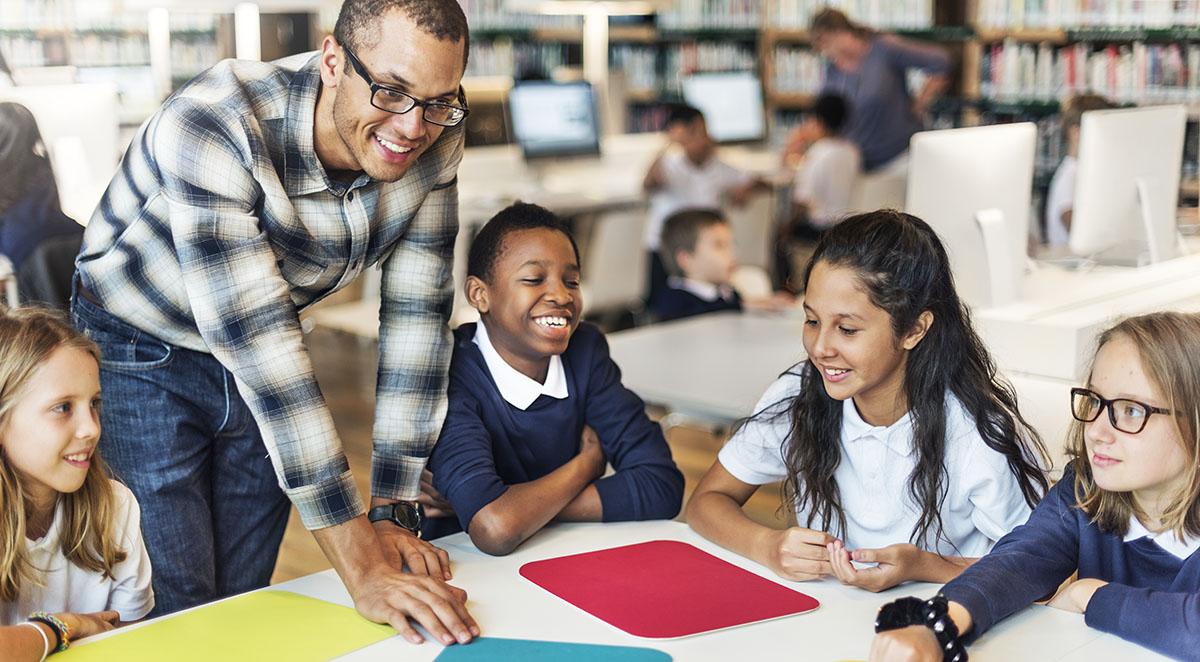
Mixed-age classrooms challenge these traditional assumptions by grouping children across multiple years—typically ages 4-8 in elementary settings—creating learning environments that mirror how humans have learned throughout history. In these natural learning communities, children learn from and teach each other, developing academic skills alongside essential life abilities like leadership, empathy, and collaboration.
For families seeking educational approaches that honor individual development while building strong learning communities, mixed-age classrooms offer compelling advantages that extend far beyond academic achievement.
1. The Problem with Age-Based Groupings
Traditional grade-level organization creates artificial limitations that often hinder rather than help children's learning and development.
Developmental Reality vs. Grade Expectations
Children develop at vastly different rates across multiple areas, making age-based grouping problematic for both academic and social-emotional growth. Research from the Harvard Graduate School of Education demonstrates that children's readiness for specific academic skills can vary by 2-3 years regardless of their chronological age.
Consider these developmental realities:
- Reading readiness may emerge anywhere from ages 4-8, with some children naturally ready for chapter books at five while others benefit from continued phonics instruction at seven
- Mathematical reasoning develops independently from computational skills, meaning a child might understand complex problem-solving while still mastering basic addition facts
- Social-emotional maturity progresses on its own timeline, with some younger children demonstrating advanced empathy and conflict resolution skills while older children still develop these abilities
- Physical development affects everything from handwriting ability to playground social dynamics, creating additional layers of individual difference that age-based grouping ignores
When schools group children solely by chronological age, they inevitably create situations where some children feel bored and unchallenged while others feel overwhelmed and inadequate—often in the same classroom during the same lesson.
Artificial Competition and Comparison
Age-based groupings create unnecessary competition among children who happen to share birth years but may have completely different strengths, interests, and developmental timelines. This artificial competition produces several negative outcomes:
- Academic anxiety develops when children constantly compare their progress to same-age peers rather than celebrating their individual growth and achievements
- Fixed mindset thinking emerges as children begin to see themselves as "smart" or "not smart" based on relative performance rather than understanding that abilities develop through effort and practice
- Social stratification occurs as children get labeled based on their performance relative to age-based expectations rather than being valued for their unique contributions
- Reduced collaboration happens when children see classmates as competitors rather than learning partners who can offer different perspectives and support
Limited Learning Opportunities
Single-age classrooms restrict the natural learning opportunities that occur when children interact across developmental levels:
Teaching opportunities disappear when all children are presumed to be at similar skill levels, eliminating chances for advanced learners to reinforce their understanding by helping others.
Modeling benefits are lost when children only interact with peers at similar developmental stages rather than observing what's possible with continued growth and effort.
Leadership development gets constrained when age-based hierarchies limit which children can take on mentoring and guidance roles within the learning community.
2. How Mixed-Age Learning Works
Mixed-age classrooms operate on fundamentally different principles that align with how children naturally learn and develop.
Natural Mentoring Relationships
In mixed-age environments, mentoring relationships develop organically as older or more experienced children naturally support younger peers:
- Academic mentoring occurs when children who have mastered specific skills help others who are still developing those abilities, creating authentic teaching opportunities
- Social mentoring happens as older children model appropriate behavior, conflict resolution, and community participation for younger classmates
- Emotional mentoring develops when experienced students help newer or younger children navigate challenges, disappointments, and social situations
- Cultural mentoring takes place as children who have been in the school community longer welcome and orient newcomers to classroom traditions and expectations
These mentoring relationships benefit both participants—older children solidify their own learning while developing empathy and leadership skills, while younger children receive patient, accessible support from peers who recently faced similar challenges.
Skill-Based Rather Than Age-Based Progression
Mixed-age classrooms organize learning around demonstrated abilities and interests rather than chronological age:
- Flexible groupings form based on specific skills or interests, allowing a five-year-old with advanced reading skills to participate in complex literature discussions while still receiving appropriate support in areas like writing or mathematics
- Individual pacing becomes natural when children aren't confined to age-based expectations, allowing each child to progress as they demonstrate mastery rather than waiting for the entire age cohort
- Interest integration works more effectively when children can pursue deep investigations without worrying about whether their topics are "age-appropriate" according to arbitrary grade-level designations
- Authentic assessment focuses on individual growth and mastery rather than comparison to age-based benchmarks that may not reflect meaningful learning
3. Academic Benefits of Mixed-Age Classrooms
Research consistently demonstrates that mixed-age learning environments produce superior academic outcomes compared to traditional single-age classrooms.
Enhanced Learning Through Teaching
One of the most powerful aspects of mixed-age classrooms is the authentic teaching opportunities they create. When children explain concepts to younger or less experienced peers, several important learning processes occur:
- Knowledge consolidation happens as children organize and articulate their understanding, identifying gaps in their own knowledge while helping others
- Metacognitive development strengthens as children think about thinking, considering how to break down complex concepts into understandable parts
- Communication skills improve as children practice explaining ideas clearly and adapting their language to their audience's understanding level
- Confidence building occurs as children experience the satisfaction and competence that comes from successfully helping others learn
The Carnegie Foundation's research on peer tutoring shows that children who teach others learn material 90% better than those who only receive instruction, making mixed-age environments powerful accelerators for academic achievement.
Reduced Academic Pressure
Mixed-age classrooms naturally reduce the academic pressure and anxiety that plague many traditionally organized schools:
- Developmental normalcy becomes apparent when children see that everyone learns different things at different times, reducing the anxiety associated with not being "ready" for age-based expectations
- Individual celebration replaces competitive comparison as children learn to appreciate their own growth and that of their peers without constant ranking and evaluation
- Mistake normalization occurs as children see older students still learning and making errors, understanding that mistakes are part of the learning process rather than indicators of inadequacy
- Multiple success pathways become visible when children observe peers succeeding in different ways and at different times, expanding their understanding of what success looks like
Personalized Pacing
Mixed-age environments make individualized pacing natural and expected rather than exceptional:
Advanced learners can accelerate in areas of strength without being held back by artificial grade-level constraints or social concerns about being "different" from their age peers.
Children needing additional time can receive support and practice without feeling behind or inadequate, as developmental differences are expected and accepted within the community.
Interest-driven deep dives become possible when children aren't constrained by age-appropriate topic limitations, allowing passionate learners to pursue advanced investigations.
Skill integration happens more naturally when children can work across traditional subject boundaries without worrying about grade-level content restrictions.
4. Social-Emotional Advantages
Mixed-age classrooms provide unique social-emotional learning opportunities that cannot be replicated in single-age environments.
Leadership Development
Leadership opportunities multiply in mixed-age settings as children can take on various roles based on their strengths and interests rather than competing for limited positions:
- Academic leadership develops when children with specific expertise share knowledge and support peers' learning in their areas of strength
- Social leadership emerges as children help resolve conflicts, welcome new community members, and maintain positive group dynamics
- Project leadership occurs when children with particular interests or skills guide collaborative investigations and creative works
- Emotional leadership grows as children learn to support peers through challenges and celebrate others' successes genuinely
These leadership experiences build confidence, communication skills, and a sense of responsibility that serves children throughout their educational journey and beyond.
Empathy Building
Mixed-age environments naturally develop empathy and perspective-taking abilities:
- Developmental awareness grows as children interact with peers at different stages, learning to appreciate and accommodate various needs and abilities
- Patient support develops as children learn to help others without frustration or judgment, understanding that everyone learns at their own pace
- Inclusive thinking strengthens as children ensure that activities and conversations include participants with different abilities and interests
- Compassionate problem-solving emerges as children learn to consider multiple perspectives and find solutions that work for community members with different needs
Confidence Through Helping Others
The opportunity to help and teach others provides unique confidence-building experiences:
Children who struggle academically often discover they have valuable social, creative, or practical skills to share, building self-esteem that might not develop in purely academic contexts.
Shy children may find their voice when supporting younger or newer students, developing communication skills and social confidence in low-pressure situations.
Children with learning differences often excel as mentors because their own challenges have taught them patience, persistence, and alternative approaches to learning.
Every child has opportunities to be both learner and teacher, creating a more balanced and positive self-concept than competitive environments typically allow.
5. Real-World Preparation
Mixed-age classrooms prepare children for the collaborative, multi-generational environments they'll encounter throughout their lives.
Workplace Collaboration Skills
The professional world operates through collaboration across experience levels, age groups, and expertise areas—exactly the skills that mixed-age classrooms develop:
- Cross-generational communication becomes natural when children regularly interact with peers at different developmental stages
- Mentoring abilities develop early as children learn to share knowledge, provide support, and guide others' development
- Team participation skills strengthen as children learn to contribute their unique strengths while supporting others in areas where they excel
- Leadership flexibility grows as children experience both leading and following in different situations and contexts
Multi-Generational Communication
Mixed-age environments teach children to adapt their communication style based on their audience:
- Language modification skills develop as children learn to explain concepts using vocabulary and examples appropriate for different understanding levels
- Patience cultivation occurs as children learn that effective communication sometimes requires repetition, demonstration, and alternative approaches
- Active listening improves as children learn to understand and respond to perspectives from different developmental stages
- Conflict resolution abilities strengthen as children navigate disagreements that may involve different maturity levels and communication styles
6. Supporting Mixed-Age Success
Families considering mixed-age education often wonder how to support their children's success in these environments.
Understanding the Adjustment Process
Children transitioning from single-age to mixed-age environments may need time to adapt to new expectations and opportunities:
Initially, some children may feel uncertain about interacting with peers of different ages, but most adapt quickly when they experience the supportive community atmosphere.
Academic adjustment typically involves children discovering they can work at their appropriate challenge level without feeling pressure to match age-based expectations.
Social adjustment may include learning new ways to contribute to the community and finding their role within the multi-age group.
Home Support Strategies
Families can support mixed-age learning success through various approaches:
- Celebrating individual growth rather than comparing progress to age-based benchmarks helps children develop internal motivation and self-awareness
- Encouraging helping behaviors at home reinforces the mentoring skills and empathy that mixed-age classrooms develop
- Discussing diverse perspectives helps children appreciate different viewpoints and approaches to problems and challenges
- Modeling inclusive behavior demonstrates how to value and support community members with different strengths and needs
7. Frequently Asked Questions
Will my child be academically challenged in a mixed-age classroom?
Mixed-age classrooms often provide more appropriate academic challenges because children work at their skill level rather than their age level. Advanced learners can access more complex material while still developing leadership and social skills through peer mentoring.
What if my child is shy and gets overlooked in a mixed-age environment?
Mixed-age classrooms often benefit shy children because they provide multiple ways to participate and contribute. Children can find their comfort zone through helping younger students, pursuing individual interests, or participating in small group activities.
How do teachers manage instruction with such diverse ability levels?
Skilled mixed-age teachers use flexible grouping, project-based learning, and individualized instruction to meet diverse needs. The peer teaching and natural mentoring that occurs actually supports teacher efforts by creating multiple learning resources within the classroom.
Will mixed-age learning prepare my child for traditional middle school?
Children from mixed-age programs often transition successfully to traditional schools because they've developed strong social skills, leadership abilities, and learning independence. They're typically comfortable working with diverse groups and advocating for their learning needs.
How do you ensure all children receive appropriate academic content?
Quality mixed-age programs maintain careful documentation of each child's progress and ensure exposure to all required academic standards through engaging, multi-level activities and individualized learning plans.
8. The Research Foundation
Extensive research supports the benefits of mixed-age learning environments. Studies from institutions including Harvard University, the University of Chicago, and international educational research organizations consistently demonstrate that children in mixed-age classrooms show:
- Superior academic achievement across multiple subject areas
- Enhanced social-emotional development including empathy, leadership, and collaboration skills
- Reduced behavioral problems and increased intrinsic motivation
- Better preparation for diverse, collaborative environments
The Montessori research base, spanning over a century of mixed-age implementation, provides particularly strong evidence for the academic and social benefits of multi-age learning environments.
Mixed-age classrooms represent a return to natural learning patterns that honor individual development while building strong learning communities. Rather than forcing children into artificial age-based constraints, mixed-age environments allow each child to learn at their appropriate level while developing the social, emotional, and leadership skills essential for lifelong success.
For families seeking educational approaches that prepare children for collaborative, diverse, and rapidly changing futures, mixed-age learning offers compelling advantages. Children develop not only academic competence but also the empathy, communication skills, and leadership abilities that define effective adults in personal and professional settings.
At iBis Learning, our mixed-age environment serves children ages 4-8, creating optimal conditions for peer mentoring, individualized learning, and community building. Our small class sizes and child-centered approach ensure that every child experiences both the support they need and the opportunities to support others.
The future belongs to collaborative, empathetic, and adaptable individuals who can work effectively across differences in age, culture, and experience. Mixed-age learning environments provide the foundation for these essential abilities while ensuring strong academic preparation and joyful learning experiences.
Contact iBis Learning today to learn more about our mixed-age approach and discover how natural learning communities can benefit your child's academic, social, and emotional development.