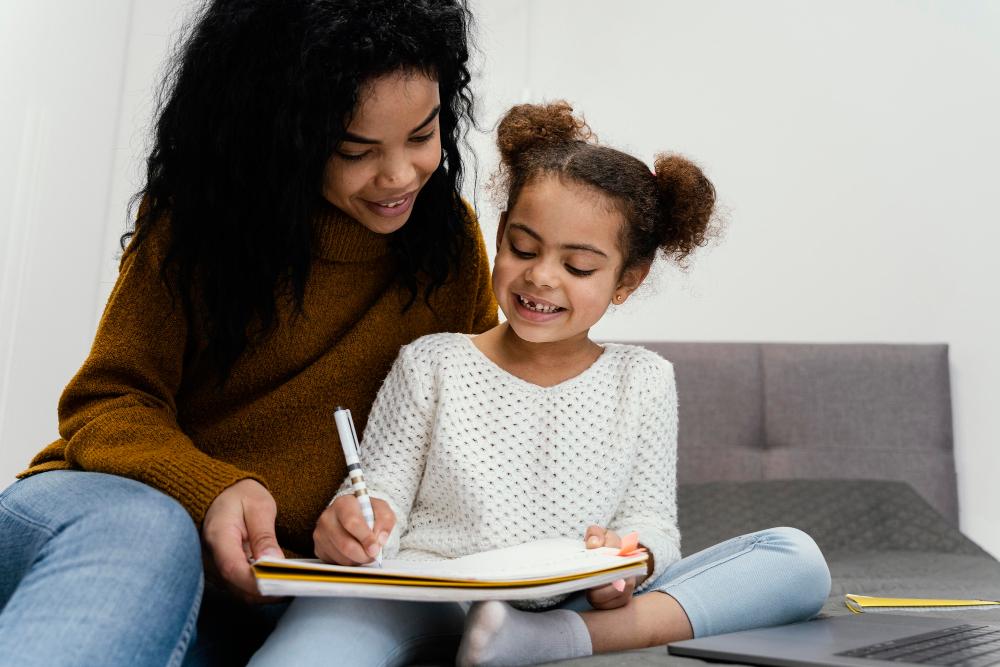
 Houston families increasingly find themselves seeking educational alternatives that don't require choosing between professional instruction and family involvement, between academic rigor and scheduling flexibility, or between high-quality curriculum and personalized attention. Traditional schools often demand full-time commitment with limited family input, while homeschooling can feel overwhelming for parents who want professional expertise alongside their family values and involvement.
Professional Education Meets Family Flexibility
Hybrid schooling offers a compelling solution that combines the best elements of professional education with meaningful family partnership. This innovative approach allows families to access expert instruction, systematic curriculum, and peer learning opportunities while maintaining flexibility, family involvement, and customized pacing that pure institutional or purely home-based approaches cannot provide.
For Houston's diverse families—from dual-career professionals to parents exploring homeschooling to those seeking alternatives to overcrowded traditional schools—hybrid models provide educational options that adapt to family needs rather than requiring families to conform to institutional constraints.
What Hybrid Schooling Means
Hybrid education creates intentional partnerships between professional educators and families, sharing educational responsibilities in ways that leverage the strengths of both school and home environments.
Professional Instruction + Family Involvement
Hybrid models combine expert teaching with meaningful family participation:
- Qualified educators provide systematic instruction in core academic areas using research-based curricula and proven teaching methods
- Family expertise contributes through cultural knowledge, individual child understanding, and values integration that only families can provide
- Collaborative planning involves both educators and families in goal-setting, progress monitoring, and educational decision-making
- Shared responsibility divides educational tasks based on expertise and resources rather than assuming either schools or families must do everything independently
Flexible Scheduling Options
Hybrid programs accommodate diverse family needs through various scheduling arrangements:
- Part-time attendance allows children to receive professional instruction several days per week while families maintain flexibility for travel, appointments, or extended learning opportunities.
- Subject-specific partnerships might involve schools providing instruction in areas requiring specialized expertise while families handle other subjects at home.
- Seasonal flexibility accommodates family schedules that vary throughout the year due to work demands, travel, or other circumstances.
- Individual customization adapts scheduling to each family's unique needs rather than requiring all families to follow identical patterns.
Best of Both Worlds Approach
Effective hybrid models maximize advantages while minimizing drawbacks of purely institutional or purely home-based education:
- Professional expertise in curriculum development, assessment, and specialized subject areas that many families cannot provide independently
- Family values integration that ensures education aligns with family beliefs and cultural traditions without compromising academic quality
- Peer interaction opportunities that provide socialization and collaborative learning within a manageable, supportive community
- Individual attention that allows for personalized pacing and customized approaches while maintaining systematic skill development
Benefits of Hybrid Models
Hybrid education addresses many concerns that families have about both traditional schooling and independent homeschooling.
Family Flexibility
Hybrid approaches accommodate the reality of modern family life:
- Work schedule coordination allows professional parents to maintain career demands while staying actively involved in their children's education
- Travel opportunities become possible when education doesn't require rigid daily attendance at specific times and locations
- Individual family rhythms can be honored when some learning happens at home according to family preferences and optimal learning times
- Special circumstances accommodation includes medical needs, family emergencies, or other situations that traditional schools handle poorly
Professional Expertise
Families gain access to educational resources and knowledge that would be difficult to provide independently:
- Curriculum expertise through teachers trained in child development, learning theory, and subject-specific pedagogy that ensures comprehensive academic preparation.
- Assessment knowledge that helps families understand their children's progress and areas needing attention without requiring parents to become evaluation experts.
- Peer interaction facilitation by professionals who understand how to create positive group dynamics and collaborative learning opportunities.
- Resource access including specialized materials, technology, and learning tools that individual families might not afford or know how to use effectively.
Customized Learning
Hybrid models excel at providing individualized education:
- Pacing flexibility that allows children to spend more time mastering challenging concepts or accelerate through material they grasp quickly
- Learning style accommodation through multiple instructional approaches and activity options that match individual preferences and needs
- Interest integration that builds on children's natural curiosities and passions while ensuring comprehensive academic coverage
- Family culture inclusion that honors diverse backgrounds, languages, and values within the educational experience
Types of Hybrid Programs
Houston families can choose among various hybrid education models depending on their specific needs and priorities.
Part-Time Attendance Options
These programs provide professional instruction for portion of the week:
- Morning core programs offer intensive instruction in fundamental subjects like literacy, mathematics, and science several days per week
- Afternoon enrichment provides specialized instruction in areas like arts, languages, or advanced subjects while families handle core academics
- Three-day models combine comprehensive instruction with extended weekends for family activities and individual learning
- Seasonal programs provide intensive instruction during certain periods while allowing family flexibility during others
Subject-Specific Partnerships
Some hybrid models divide subjects between school and home based on expertise and resources:
- STEM specialization where schools provide science, technology, engineering, and mathematics instruction while families handle humanities and social studies.
- Language arts focus with schools providing systematic reading and writing instruction while families manage other subject areas.
- Advanced subject support for gifted learners who need specialized instruction in particular areas while maintaining grade-appropriate work in others.
- Special needs services that provide therapeutic or specialized instruction while families maintain involvement in other educational areas.
Enrichment-Focused Models
These programs supplement rather than replace family-directed education:
- Academic support that provides tutoring, assessment, and curriculum guidance for homeschooling families
- Social programs that offer peer interaction, group projects, and collaborative learning opportunities
- Specialized instruction in areas requiring expert knowledge or expensive equipment like laboratory sciences or technology
- Cultural programs that provide music, arts, languages, or other enrichment areas beyond most families' expertise
iBis Learning's Hybrid Approach
Our educational model demonstrates how professional instruction and family partnership can work together seamlessly.
Core Instruction + Home Extension
We provide intensive professional instruction while supporting families in extending learning at home:
- Morning core program delivers systematic instruction in literacy, mathematics, science, and dual-language development using proven curricula and methods
- Home learning materials extend and reinforce school instruction through engaging activities families can implement without special training
- Flexible scheduling accommodates family needs through various attendance options while maintaining educational continuity
- Family communication provides regular updates, suggestions, and resources that help parents support their children's learning effectively
Family Partnership Model
We treat families as genuine partners in their children's education:
- Collaborative goal-setting involves families in establishing priorities and objectives that align with both academic standards and family values.
- Regular communication provides detailed information about children's progress, challenges, and achievements while seeking family input and insights.
- Home-school coordination ensures that approaches used at school and home complement rather than conflict with each other.
- Cultural integration honors diverse family backgrounds and values while maintaining academic rigor and comprehensive preparation.
Flexible Scheduling Options
Our program structure accommodates diverse family needs:
- Core instruction options available mornings only for families wanting afternoon flexibility or full-day for working parents needing extended coverage
- Seasonal adjustments that accommodate family travel, work demands, or changing circumstances throughout the year
- Individual modifications for families with special needs, circumstances, or educational philosophies requiring customized approaches
- Gradual transitions that allow families to adjust their involvement levels as children mature or family circumstances change
Houston Family Considerations
Houston's diverse community creates unique opportunities and challenges for hybrid education models.
Work-Life Balance
Many Houston families include dual-career professionals who need flexible educational options:
- Professional demands in industries like energy, healthcare, and technology that require travel, varying schedules, or intensive work periods
- Commute realities in Houston's sprawling metropolitan area that make traditional school schedules challenging for some families
- Economic considerations that require both parents to work while maintaining involvement in their children's education
- Career development needs that benefit from educational flexibility during training, advancement, or career transition periods
Educational Continuity
Houston families often face mobility challenges that hybrid models can address:
- Corporate relocations that require families to move within or outside Houston while maintaining educational consistency.
- Military families at nearby bases who need educational options that accommodate deployment schedules and frequent moves.
- International families who may return to home countries and need education that transfers effectively across different systems.
- Economic fluctuations that may require families to adjust educational spending while maintaining quality instruction.
Community Connections
Hybrid models can strengthen rather than weaken community involvement:
- Neighborhood relationships that flourish when families have more flexibility for community involvement and local activities
- Extended family connections that benefit from flexible schedules allowing visits and cultural activities with relatives
- Religious and cultural participation that increases when education accommodates rather than competes with family traditions
- Community service opportunities that arise when families have flexibility to participate in volunteer activities and civic engagement
Supporting Hybrid Education Success
Families considering hybrid education benefit from understanding how to maximize this approach's effectiveness.
Home Learning Environment
Successful hybrid education requires intentional home learning support:
- Organized learning spaces that provide quiet, well-equipped areas for home learning activities and project work
- Resource accessibility including books, materials, and technology that support and extend school instruction
- Family routine integration that builds learning activities into daily life rather than treating them as additional burdens
- Sibling coordination in families with multiple children that ensures each child receives appropriate attention and support
Communication and Collaboration
Hybrid success depends on effective partnership between families and educators:
- Regular check-ins to discuss children's progress, challenges, and changing needs or circumstances.
- Clear expectations about responsibilities, deadlines, and communication methods that prevent misunderstandings.
- Problem-solving collaboration when challenges arise that requires both family and educational expertise to resolve.
- Goal alignment to ensure that school and home approaches support rather than undermine each other.
Long-Term Planning
Hybrid education works best when families consider long-term educational goals:
- Transition preparation for eventual moves to traditional schools, if desired, through appropriate documentation and skill development
- High school readiness that ensures hybrid elementary education provides strong foundations for secondary school success
- College preparation that develops independent learning skills and academic competencies needed for higher education
- Life skills development that balances academic achievement with practical abilities and personal growth
Frequently Asked Questions
How much time commitment does hybrid education require from parents?
Time commitment varies by program and family choice, but most hybrid models require 10-15 hours per week of family involvement including home learning activities, communication, and coordination.
Will my child miss out on social opportunities in hybrid programs?
Quality hybrid programs provide regular peer interaction through group activities, collaborative projects, and community events while often allowing more diverse social connections than traditional age-segregated classrooms.
How do hybrid programs ensure academic rigor and comprehensive coverage?
Professional educators in hybrid programs use systematic curricula, regular assessment, and progress monitoring to ensure children master essential skills while families provide additional support and enrichment.
What if our family circumstances change during the year?
Most hybrid programs build flexibility into their models, allowing families to adjust their involvement levels or scheduling arrangements as needs change throughout the year.
How do hybrid programs prepare children for traditional schools later?
Children from hybrid programs often transition successfully because they've developed strong independent learning skills, family-school communication abilities, and academic foundations that serve them well in various educational environments.
The Houston Opportunity
Houston's size, diversity, and professional culture create ideal conditions for hybrid education success. The metropolitan area offers rich resources for extending classroom learning through museums, cultural institutions, and expert communities while providing the flexibility that modern families need.
Houston families often bring professional expertise that enriches hybrid education while appreciating educational approaches that accommodate their complex schedules and high expectations for quality.
The city's entrepreneurial spirit aligns well with hybrid education's innovative approach to meeting family needs through customized solutions rather than one-size-fits-all institutional requirements.
Hybrid education represents the future of family-centered learning that honors both professional expertise and family values. For Houston families seeking alternatives to the limitations of purely traditional or purely home-based education, hybrid models provide compelling solutions that adapt to family needs while maintaining academic excellence.
At iBis Learning, our hybrid approach demonstrates how professional instruction and family partnership can work together to create optimal learning experiences for children and families. Our flexible scheduling, systematic curriculum, and collaborative communication provide the structure families need with the adaptability modern life requires.
The elementary years establish learning patterns and family relationships around education that influence children's entire academic journey. Schools that partner with rather than compete with families create foundations for lifelong learning success and positive family dynamics.
Contact iBis Learning today to learn more about our hybrid approach and discover how professional instruction and family partnership can work together for your Houston family. Schedule a tour to see our collaborative model in action and explore how hybrid education can meet your family's unique needs and priorities.