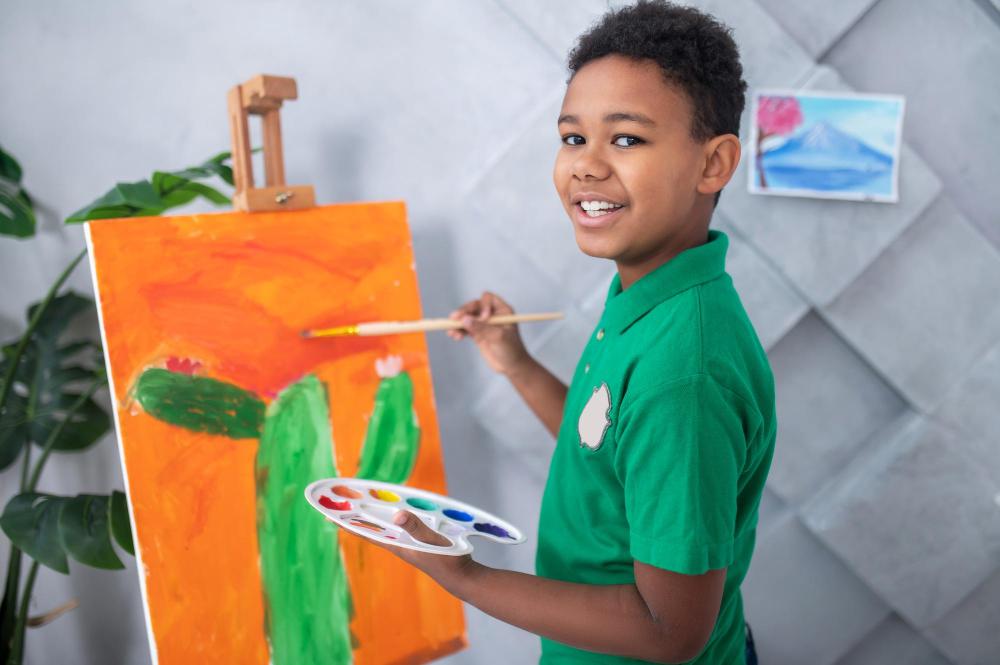
 In Houston's vast educational landscape, finding a school that truly sees your child as an individual can feel overwhelming. With over 2.3 million people calling the Greater Houston area home, many children get lost in overcrowded classrooms where teachers struggle to provide the personalized attention every child deserves. At iBis Learning, we believe that individual attention isn't a luxury—it's essential for helping children reach their full potential.
A School Where Every Child is Seen and Heard
Located in Houston's Spring Branch area and serving families throughout the metropolitan region, iBis Learning offers something increasingly rare in today's educational environment: genuine personalized learning in small student ratio classrooms. For parents searching for individual attention schools in Houston, our approach provides the focused support that helps children not just succeed academically, but develop the confidence and skills they need for lifelong learning.
Why Individual Attention Matters in Your Child's Educational Journey
Every child learns differently, processes information at their own pace, and has unique strengths that deserve recognition and development. In traditional Houston schools with class sizes often exceeding 25 students, teachers face the impossible task of meeting individual needs while managing large groups.
True individual attention includes:
- Understanding each child's unique learning style and preferences
- Recognizing emotional and social development needs
- Adapting instruction to individual developmental levels
- Providing specific support for overcoming challenges
- Building on each child's natural strengths and interests
- Offering immediate feedback and course corrections
At iBis Learning, our maximum teacher-to-student ratio of 1:12 ensures that every child receives the individual attention they need. This isn't just about having fewer students in a classroom—it's about creating an environment where teachers can form meaningful relationships with each child, understand their unique learning profile, and adapt instruction to meet their specific needs.
Houston families often share stories of children who were struggling in traditional settings but flourished once they received appropriate individual attention. These transformations aren't miraculous—they're the natural result of matching educational approaches to individual learning needs rather than forcing children to adapt to rigid, one-size-fits-all instruction.
Our individual attention approach proves particularly beneficial for children who are advanced learners needing additional challenges, children who require more processing time to fully grasp concepts, children with unique learning styles, and children who simply learn better in smaller, more intimate educational settings.
The Houston Challenge: Finding Small Student Ratios in a Big City
Houston's rapid growth has created significant challenges for families seeking schools with small student ratios. The problems include:
Current Houston Educational Challenges:
- Even well-funded districts struggle with overcrowding
- Private schools advertising "small classes" often maintain 18-20 students per teacher
- Limited options for children needing individual support
- Traditional public schools cannot provide personalized attention with current constraints
- Private schools prioritize efficiency over personalization due to cost pressures
What makes iBis Learning different:
- Maximum 48 total students across all age groups
- Never more than 1:12 teacher-to-student ratio
- Intentionally small size allows genuine individual attention
- Focus on relationships over institutional efficiency
The difference becomes apparent immediately when families visit our campus. Children aren't competing for teacher attention or waiting in line for help—they're engaged in meaningful learning relationships where their questions are answered, their progress is monitored closely, and their unique contributions are valued and encouraged.
For Houston families who have been searching for schools that truly provide individual attention, iBis Learning offers something increasingly rare: an educational environment where every child is known, understood, and supported in their individual learning journey.
How iBis Learning Delivers Personalized Learning for Every Child
Personalized learning means more than just adjusting the pace of instruction—it involves understanding each child's complete learning profile. At iBis Learning, we implement personalized learning through multiple interconnected approaches.
Our Personalized Learning Approach:
- Mixed-age classrooms: Children learn at appropriate developmental levels, not chronological age constraints
- Continuous assessment: Ongoing observation and adjustment based on individual progress
- Individualized language support: Appropriate Spanish/English support regardless of starting point
- One-on-one conferences: Regular individual meetings for goal-setting and self-reflection
- Interest-based projects: Learning opportunities tailored to individual fascinations
- Executive function coaching: Personalized support for focus, planning, and self-regulation skills
Results Houston families see:
- Children become excited, engaged learners
- Increased confidence and self-direction
- Development of personal learning strategies
- Improved focus and self-regulation at home
Executive Function Development Through Individual Support
One of the most significant advantages of individual attention is the ability to support each child's executive function development in personalized ways. Executive functions develop at different rates for each child, and individual attention allows teachers to provide targeted support.
Executive Function Skills We Develop:
- Focus and attention: Strategies for sustained concentration
- Working memory: Techniques for holding and manipulating information
- Flexible thinking: Adapting to new situations and solving problems creatively
- Planning and organization: Breaking down tasks and managing time
- Self-regulation: Managing emotions and impulses appropriately
- Metacognitive awareness: Understanding one's own learning process
Individual Support Includes:
- Personalized coaching based on each child's developmental profile
- Specific strategies for organization, planning, or impulse control
- Gradual building of independence and self-monitoring skills
- Integration of executive function development throughout daily activities
Houston families often comment on improvements in their children's self-regulation, focus, and independence after experiencing our individualized executive function support.
Mixed-Age Learning: Individual Attention Across Development Levels
Traditional age-based grade levels often fail to address the reality that children develop academically, socially, and emotionally at different rates. Mixed-age learning environments, supported by individual attention, allow children to work at their appropriate developmental level across different subject areas rather than being constrained by their chronological age.
At iBis Learning, our mixed-age approach from ages 4-8 creates opportunities for individual attention that honors each child's unique developmental timeline. Advanced learners can work with more challenging material and serve as mentors for younger children, while children who need additional time to master concepts receive support without the stigma of being "behind" their age-mates.
Individual attention in mixed-age settings proves particularly valuable for children whose development is uneven across different areas. A child might demonstrate advanced reading skills while needing additional support with mathematical concepts, or show sophisticated emotional intelligence while still developing fine motor skills. Mixed-age learning supported by individual attention allows for this natural variation in development.
The social benefits of mixed-age learning become enhanced through individual attention as well. Teachers can facilitate meaningful interactions between children of different ages, helping younger children learn from older peers while providing older children with leadership opportunities. This natural mentoring relationship develops empathy, communication skills, and confidence in ways that same-age groupings often cannot replicate.
Houston families frequently observe that children in mixed-age environments with individual attention develop greater social flexibility and emotional intelligence. They learn to communicate with people of different ages and abilities, developing skills that serve them well in family settings, community activities, and eventually in workplace environments.
The individual attention provided in mixed-age settings also allows teachers to recognize and nurture each child's unique gifts and interests. Some children may demonstrate artistic talents that can be developed through specialized projects, while others may show scientific curiosity that benefits from individualized exploration opportunities. This recognition and development of individual strengths proves crucial for building confidence and motivation for learning.
Frequently Asked Questions About Individual Attention in School Settings
How do you determine what type of individual attention each child needs?
We use multiple assessment approaches including formal screenings, ongoing classroom observation, family input, and regular individual conferences with children. Our small student ratios allow teachers to truly know each child's learning style, interests, challenges, and strengths. We adjust our approach based on continuous feedback rather than relying on standardized categories or one-time evaluations.
Will my child be prepared for larger classroom settings after receiving so much individual attention?
Children who receive appropriate individual attention actually develop stronger independence and self-advocacy skills than those who learn to be passive in large groups. The executive function skills, self-awareness, and confidence developed through individual attention help children succeed in any educational setting. Many families report their children become leaders and strong students when they transition to other environments.
How do you balance individual attention with social learning opportunities?
Our mixed-age environment provides rich social learning opportunities while maintaining small student ratios that allow for individual attention. Children work collaboratively on projects, engage in peer mentoring, and participate in group discussions while still receiving personalized instruction. Individual attention actually enhances social learning by helping children develop the confidence and skills needed for meaningful peer interactions.
What if my child becomes too dependent on individual attention?
Our goal is to develop independent learners through appropriate individual support. We gradually increase independence as children develop stronger executive function skills and self-direction. Individual attention helps children understand their own learning needs and develop strategies for success, making them more capable of advocating for themselves in any environment.
How do small student ratios affect academic rigor?
Small student ratios actually allow for greater academic rigor because instruction can be appropriately challenging for each individual child. Rather than teaching to the middle of a large group, teachers can provide advanced challenges for ready learners while ensuring solid foundation building for others. Many children achieve more academic growth in small ratio settings because they receive instruction at their optimal challenge level.
Is individual attention only beneficial for children with learning differences?
All children benefit from individual attention regardless of their learning profile. Advanced learners need individual attention to receive appropriate challenges and avoid boredom. Typical learners benefit from personalized instruction that matches their interests and learning style. Children with learning differences certainly benefit, but individual attention supports optimal learning for every child.
How do you measure progress when providing individual attention?
We use competency-based assessment that measures each child's growth from their individual starting point rather than comparing them to grade-level standards. Regular documentation, portfolio assessment, and individual conferences provide comprehensive pictures of each child's progress. Families receive detailed information about their child's specific growth areas and next steps for continued learning.
Ready to find a Houston school where your child receives the individual attention they deserve? At iBis Learning, every child is known, valued, and supported in their unique learning journey. Our small student ratios and personalized learning approach create an environment where children thrive academically while developing the confidence and skills they need for lifelong success.
Contact us today to schedule a tour and see how individual attention can transform your child's educational experience. Discover why Houston families are choosing iBis Learning for the personalized education their children deserve.
Learn more about our programs or schedule a tour to experience our individual attention approach firsthand.