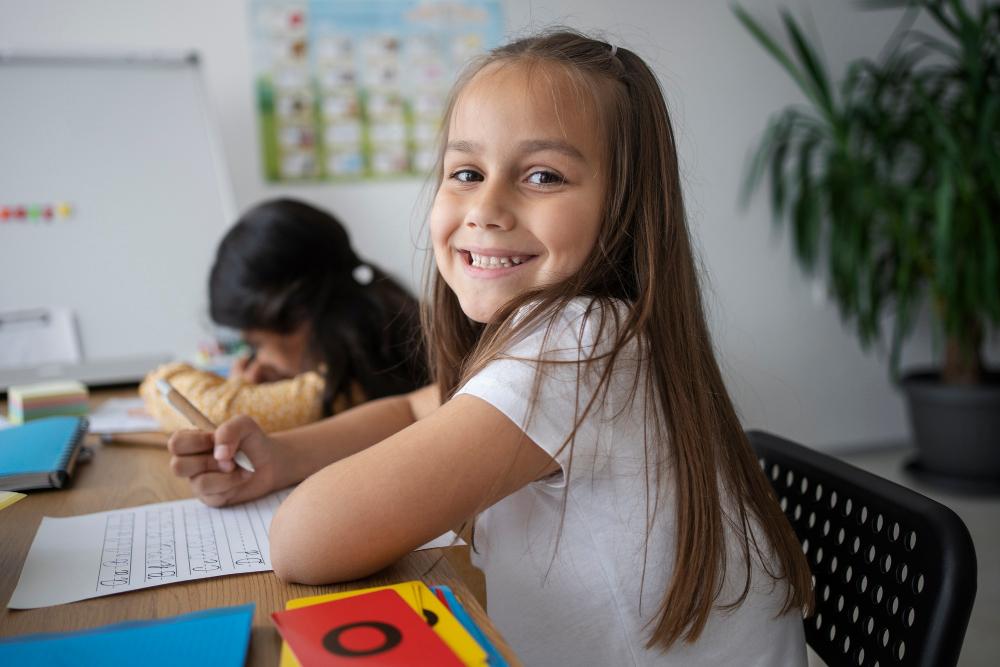
 Houston parents considering Spanish-English schools often wonder what daily life really looks like in a dual language program. Beyond the marketing materials and educational benefits, what can families actually expect when their child enters a bilingual learning environment? Understanding the day-to-day experience helps parents make informed decisions and prepare their children for success in dual language education.
What to Expect from True Dual Language Education
At iBis Learning, we believe transparency about the dual language classroom experience helps families feel confident in their educational choice. From morning routines conducted in Spanish to English literacy blocks, from playground conversations that seamlessly switch languages to family homework that includes both languages—here's what Houston families can truly expect from high-quality Spanish-English education.
A Day in the Life at a Spanish-English School
The rhythm of a day at a Spanish-English school differs significantly from traditional monolingual environments. Children don't simply attend "Spanish class"—they live and learn in both languages throughout their educational experience.
Morning arrival and community time:
The day typically begins with children greeting teachers and classmates in both Spanish and English, creating an atmosphere where bilingualism feels natural and welcomed. Morning routines—taking attendance, discussing the weather, reviewing the daily schedule—might happen entirely in Spanish, giving children immediate immersion in academic language use.
Weekly language rotation model:
At iBis Learning, we implement a weekly language rotation that provides deep immersion in each language. During Spanish weeks, literacy instruction, math discussions, science investigations, and social studies explorations all happen in Spanish. The following week, the same depth of instruction occurs in English.
What this looks like for children:
- Spanish week: Children read Spanish literature, write stories in Spanish, discuss mathematical concepts using Spanish vocabulary, and conduct science experiments with Spanish instructions and observations
- English week: The same academic rigor applies to English instruction, with children engaging in complex thinking and learning using English as their medium
- Playground and social time: Natural language mixing occurs as children communicate with friends who may prefer different languages
- Transitions and routines: Consistent expectations in both languages help children understand classroom procedures regardless of the language of instruction
Afternoon activities and reflection:
Afternoons often include project-based learning that integrates both languages naturally. Children might research a science topic using resources in both Spanish and English, create art projects with bilingual labels and explanations, or collaborate on presentations that showcase their bilingual abilities.
What parents observe:
Houston families often notice that their children begin using both languages at home, sometimes switching between languages mid-sentence as they process complex ideas. This natural code-switching represents sophisticated language processing rather than confusion.
What Dual Language Classroom Experience Really Looks Like
The dual language classroom environment differs from traditional classrooms in both obvious and subtle ways. Understanding these differences helps parents know what to expect and how to support their children's bilingual development.
Physical environment and visual supports
Bilingual classroom setup:
- Book libraries: High-quality literature in both Spanish and English at various reading levels
- Environmental print: Labels, charts, and displays in both languages throughout the room
- Cultural representations: Materials and decorations reflecting both Spanish-speaking and English-speaking cultures
- Interactive displays: Word walls, number charts, and reference materials accessible in both languages
Instructional approaches and activities
Language-rich activities:
- Literature circles: Small group discussions about books in the target language
- Writing workshops: Creative and academic writing in both Spanish and English
- Mathematical reasoning: Problem-solving discussions using academic language in both languages
- Scientific inquiry: Observations, hypotheses, and conclusions expressed bilingually
- Social studies exploration: Cultural studies that honor both linguistic communities
Peer interactions and collaboration:
Children in dual language programs often become natural language models for each other. Native Spanish speakers help English-dominant children with pronunciation and vocabulary, while English-dominant children support their Spanish-speaking peers with English academic language.
What this means for social dynamics:
- Children develop appreciation for different linguistic backgrounds
- Peer teaching becomes a natural part of classroom culture
- Language differences become celebrated strengths rather than barriers
- Friendships often cross linguistic and cultural lines
Assessment and progress monitoring
Dual language assessment:
- Portfolio development: Collections of work in both languages showing growth over time
- Bilingual conferences: Individual meetings where children demonstrate learning in both languages
- Performance-based assessment: Projects and presentations that showcase bilingual competence
- Family communication: Progress reports that explain development in both languages
Parents can expect regular communication about their child's progress in both languages, with specific feedback about areas of strength and growth in bilingual development.
How Children Navigate Between Spanish and English Learning
One of the most common questions Houston parents have about Spanish-English schools concerns how children manage learning in two languages. Understanding this process helps families support their children's bilingual journey.
Cognitive processing in bilingual learning
How children's brains adapt:
Research shows that bilingual children develop enhanced cognitive flexibility as they learn to think, problem-solve, and express ideas in two languages. This adaptation takes time but creates lasting advantages for learning and thinking.
What parents observe during this process:
- Initial adjustment period: Children may seem tired after school as their brains work harder to process information in both languages
- Silent periods: Some children go through phases where they listen more than they speak in their developing language
- Language mixing: Natural code-switching as children access vocabulary and concepts from both language systems
- Breakthrough moments: Sudden leaps in fluency and confidence in the developing language
Academic content integration
Subject-area learning in two languages:
Children don't learn math separately in Spanish and English—they develop mathematical understanding through both languages, which actually deepens their comprehension of mathematical concepts.
Cross-linguistic connections:
- Vocabulary development: Learning synonyms across languages strengthens overall vocabulary
- Conceptual understanding: Exploring ideas in two languages creates deeper comprehension
- Cultural perspectives: Different languages offer different ways of understanding concepts
- Academic language growth: Sophisticated thinking develops in both languages simultaneously
Social and emotional navigation
Building bilingual identity:
Children in Spanish-English schools develop confidence in both linguistic communities. They learn to navigate different social contexts, understanding when to use each language appropriately.
What this development includes:
- Cultural competency: Understanding behaviors and expectations in different linguistic communities
- Communication skills: Adapting language use to different audiences and situations
- Leadership abilities: Serving as interpreters and cultural bridges for others
- Global awareness: Understanding their place in an interconnected, multilingual world
What Houston Parents Can Expect in the First Year
The first year in a Spanish-English school brings excitement, challenges, and significant growth for both children and families. Understanding typical first-year experiences helps parents support their children effectively.
Initial adjustment and adaptation
First few weeks:
Children entering Spanish-English schools often experience an adjustment period as they adapt to learning in two languages. This is completely normal and expected, regardless of their previous language exposure.
Common first-year experiences:
- Increased tiredness: Bilingual learning requires more cognitive energy initially
- Language preference phases: Children may temporarily prefer one language over the other
- Social navigation: Learning to make friends across different linguistic backgrounds
- Academic confidence building: Gaining comfort with academic tasks in both languages
How long adjustment typically takes:
- 2-4 weeks: Initial settling into routines and expectations
- 2-3 months: Comfort with classroom procedures and basic social interactions
- 6-8 months: Noticeable progress in academic language development
- Full year: Solid foundation for continued bilingual growth
Academic progress expectations
Reading development in two languages:
Children develop literacy skills at different rates in Spanish and English, and this variation is normal and expected. Parents shouldn't expect identical progress in both languages simultaneously.
What reading progress looks like:
- Phonemic awareness: Understanding sound systems in both languages
- Decoding skills: Learning to read words in different orthographic systems
- Comprehension development: Understanding text meaning in both languages
- Fluency building: Reading smoothly and expressively in both languages
Mathematical learning expectations:
Math concepts transfer between languages, but children need time to learn mathematical vocabulary in both Spanish and English.
Family involvement and support
How families can help:
The most successful Spanish-English school experiences happen when families support bilingual development at home, regardless of their own language abilities.
Effective family support strategies:
- Positive attitude: Celebrating bilingual development and cultural learning
- Home language maintenance: Continuing to use and develop the family's home language
- Community connections: Participating in school events and bilingual community activities
- Patience and encouragement: Understanding that bilingual development takes time
Long-Term Outcomes from Spanish-English Education
Houston families investing in Spanish-English education want to understand the long-term benefits and outcomes for their children. Research and real-world experiences provide clear evidence of the advantages bilingual education offers.
Academic advantages over time
Cognitive benefits that increase with age:
The executive function advantages that bilingual children develop—enhanced focus, flexible thinking, superior problem-solving—become more pronounced as children mature and face increasingly complex academic challenges.
Long-term academic outcomes:
- Enhanced reading comprehension: Bilingual children often outperform monolingual peers in reading across languages
- Mathematical reasoning: Stronger problem-solving abilities and mathematical thinking skills
- Scientific inquiry: Better hypothesis generation and analytical thinking
- Creative expression: Enhanced creativity and original thinking across subject areas
Social and cultural competency
Global citizenship development:
Children from Spanish-English schools develop cultural competency that serves them throughout their lives, preparing them for success in increasingly diverse communities and workplaces.
Social-emotional outcomes:
- Empathy and perspective-taking: Understanding different viewpoints and experiences
- Communication skills: Ability to connect with people from diverse backgrounds
- Leadership potential: Skills for bridging different communities and facilitating understanding
- Cultural pride: Appreciation for linguistic diversity and multicultural experiences
Career and life advantages
Professional preparation:
Houston's diverse economy values bilingual professionals, and children who develop true bilingual competency have significant advantages in many career fields.
Economic benefits:
- Employment opportunities: Access to positions requiring bilingual abilities
- Salary advantages: Bilingual employees often earn higher wages
- Career advancement: Leadership opportunities in diverse organizations
- Entrepreneurial possibilities: Ability to serve diverse markets and communities
Educational pathway advantages
High school and college preparation:
Students from high-quality Spanish-English programs often have advantages when applying to competitive high schools and colleges, particularly as institutions increasingly value diversity and global perspectives.
Advanced academic opportunities:
- AP Spanish success: Native-like fluency leads to high performance on advanced language exams
- International programs: Preparation for study abroad and international academic experiences
- College applications: Bilingual competency distinguished students in competitive admission processes
- Scholarship opportunities: Many scholarships specifically support bilingual and bicultural students
Common Questions About Dual Language School Experience
Will my child be confused learning in two languages?
Children are remarkably capable of learning multiple languages simultaneously. While there may be an initial adjustment period where children seem to mix languages or prefer one over the other, this is a normal part of bilingual development rather than confusion. Research consistently shows that bilingual education enhances rather than hinders cognitive development.
What if our family doesn't speak Spanish at home?
Families don't need to speak Spanish at home for children to succeed in Spanish-English schools. The most important family support is maintaining a positive attitude toward bilingual learning and continuing to develop your child's home language. Schools provide the Spanish instruction and practice children need for academic success.
How do you ensure children learn academic content while focusing on language development?
High-quality Spanish-English schools teach academic content through both languages rather than treating language as a separate subject. Children learn math, science, social studies, and literacy skills in both Spanish and English, which actually deepens their understanding of academic concepts while developing bilingual abilities.
What happens if we move and need to change schools?
Bilingual skills and the cognitive advantages of dual language education transfer to any educational setting. Many schools throughout the United States offer dual language programs, and children with bilingual abilities often perform well in monolingual settings due to their enhanced cognitive flexibility and communication skills.
How do you handle children with different levels of Spanish and English?
Mixed language backgrounds actually enrich the dual language experience. Children naturally support each other's language development, and teachers use differentiated instruction to meet each child's needs regardless of their starting language levels. This diversity creates authentic opportunities for peer learning and cultural exchange.
Will learning in Spanish interfere with English academic development?
Research consistently demonstrates that children in high-quality dual language programs meet or exceed English academic standards while gaining the additional benefit of Spanish proficiency. The cognitive advantages of bilingualism actually support stronger English language and literacy development.
How do you prepare children for standardized tests given in English?
Dual language programs align with academic standards in both languages, ensuring children develop the skills and knowledge needed for academic success. The cognitive flexibility developed through bilingual education often leads to stronger performance on standardized assessments, as children can approach problems from multiple perspectives.
Ready to discover what Spanish-English education can offer your Houston family? Understanding the day-to-day experience helps families make confident decisions about dual language education. At iBis Learning, we're committed to providing transparent information about our dual language program so families know exactly what to expect.
Contact us today to learn more about our Spanish-English program and discuss whether dual language education is right for your child's unique needs and interests.
Schedule a tour to observe our dual language classroom in action and experience firsthand what daily life looks like in a high-quality Spanish-English school.